The Challenge
A leading financial services provider was struggling with a massive library of legacy RPA bots. Over 50 bots had been deployed across the organization, each one brittle, requiring constant maintenance, and unable to handle even minor changes in UI or business logic. Weekly failures were the norm, not the exception.
The operational burden was immense: a dedicated team of 12 engineers spent most of their time patching broken scripts instead of building new capabilities. Leadership recognized this wasn’t sustainable.
Our Approach
We implemented a phased transition from RPA to Agentic AI using our Discover · Calibrate · Decode · Activate framework:
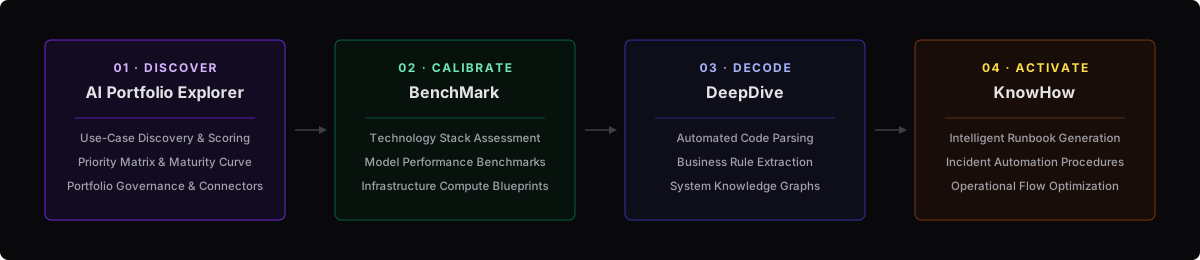
The transformation followed three phases of the framework: first, we calibrated the environment using BenchMark to map RPA processes; next, we decoded the underlying business logic using DeepDive to build process knowledge graphs; finally, we activated the knowledge by deploying autonomous AI agents to manage exceptions and adapt to UI changes.
The Results
- 60% reduction in maintenance costs: AI agents adapted to changes that previously broke RPA scripts, dramatically reducing the engineering burden.
- 99.5% process success rate: Up from 82% with the legacy RPA layer. Agents handle exceptions intelligently instead of failing silently.
- 10x transaction throughput: The new architecture processed orders of magnitude more transactions without proportional infrastructure scaling.
- 4 months to full production: From initial assessment to complete production cutover in under 120 days.